
One of the most wondrous traits of humankind is our imagination. It has given birth not only to groundbreaking discoveries and inventions, but also to legendary tales that have been passed down from generation to generation for thousands of years.
Just think about it: curious human minds, visionaries of their time, looked up at the night sky and saw more than countless twinkling points of light. They began connecting those sparkly dots, stars, in their imagination. A particular arrangement of stars could resemble a mighty hunter, a great bear, a scorpion, or even a mythical creature. The ancient Greeks, for example, imagined the stars of Orion as a legendary hunter, while the stars of Ursa Major were associated with a great bear. Across different civilizations, people looked at the same sky and created their own patterns, characters, and stories.
What is a constellation?
A constellation is a recognized region of the night sky containing a particular group or pattern of stars.
The constellations we see at night aren't constant. As Earth travels around the Sun, the side facing away from the Sun points toward different regions of the celestial sphere, causing the constellations visible in our night sky to gradually change throughout the year.
For example, Orion is prominent in the evening sky during the winter months, while Scorpius and Sagittarius become much more prominent during summer evenings in Bangladesh. So, as we celebrate Space Week, let's turn our eyes to the October night sky and see which constellations—and the stories woven around them—we can find above Bangladesh this time of year.
October is especially interesting because the sky is transitioning from the summer constellations toward the winter constellations. As October arrives, the night sky begins to change its appearance. Constellations that dominate the summer sky slowly move toward the western horizon, while familiar winter constellations begin to rise in the east.
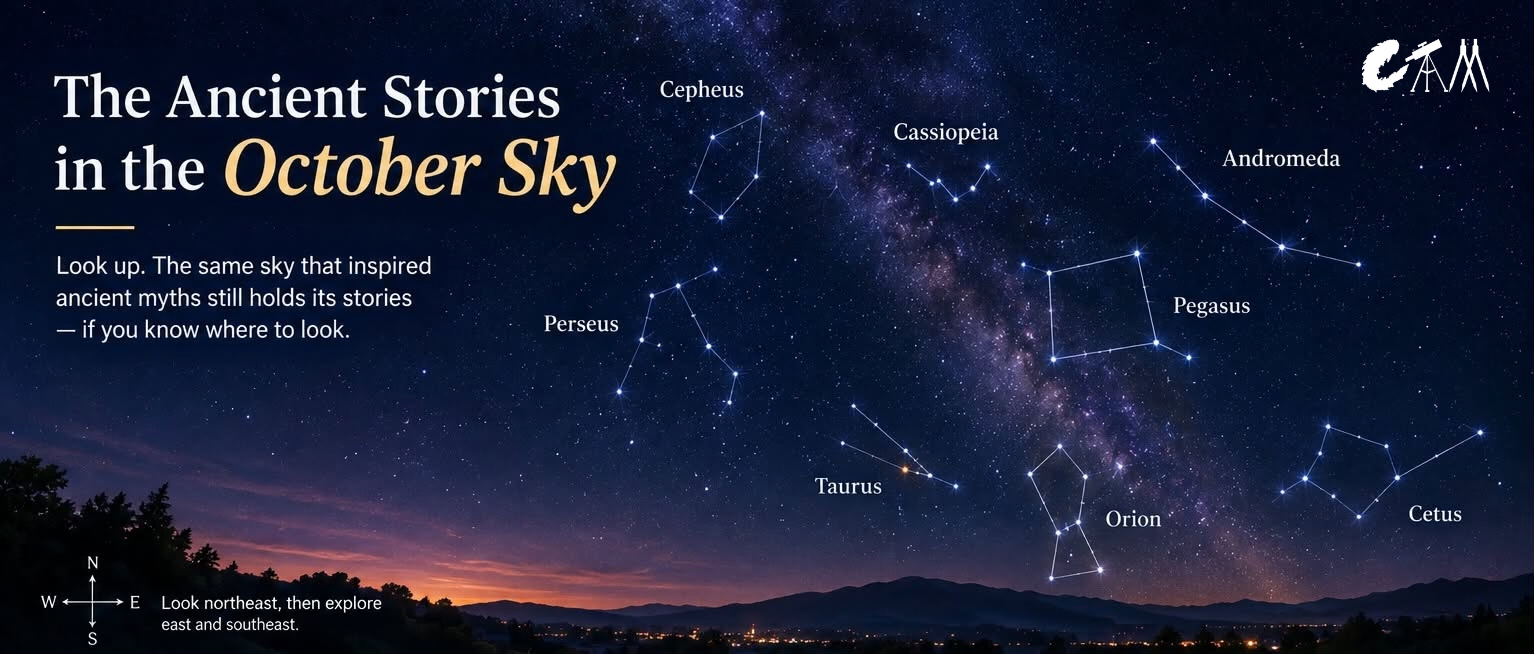
For stargazers, October offers a beautiful transition between two celestial seasons, with constellations such as Cassiopeia, Andromeda, Perseus, Pegasus, Taurus, and Orion offering plenty to explore.
“Look up at the October night sky and you might see more than stars…”
You might see a queen, a princess, and a hero—frozen forever among the constellations.
Tonight, we journey into one of the most fascinating tales written across the stars: the story of Cassiopeia, the proud queen; Andromeda, her daughter; and Perseus, the brave hero. Their ancient story connects several constellations that we can still find in the night sky today.
The Celestial Legend
Our story begins with
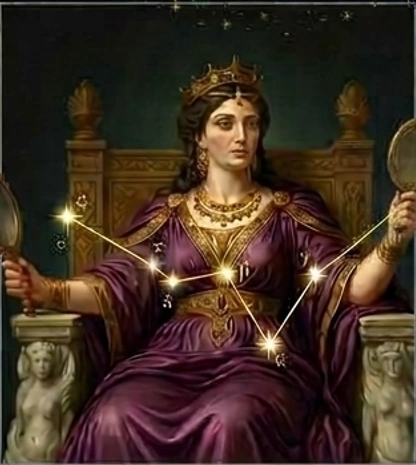
—the queen whose pride set the tale in motion.
Long ago, in the ancient kingdom of Ethiopia, there lived a queen named Cassiopeia. She was beautiful, but she was also known for her pride.
One day, Cassiopeia proudly declared that she and her daughter, Andromeda, the princess, were more beautiful than the Nereids, the sea nymphs. Her words angered Poseidon, god of the sea.
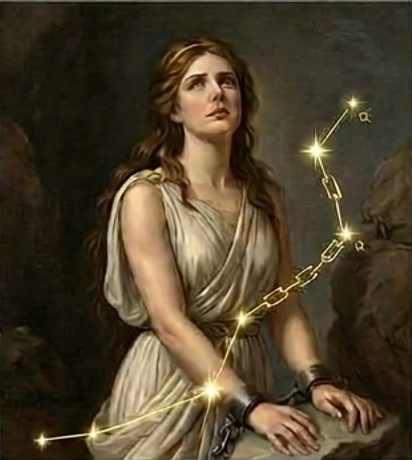
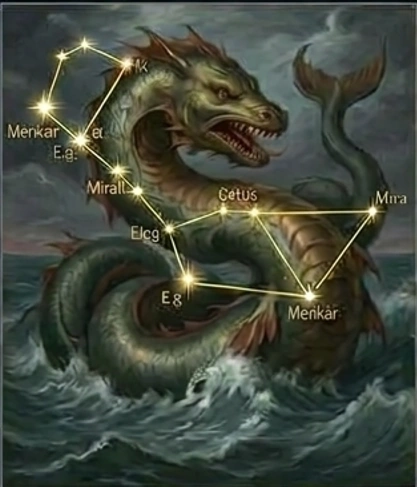
As punishment, Poseidon sent a terrible sea monster, Cetus, to threaten the kingdom. To save her people, Andromeda was chained to a rock as a sacrifice to the monster.
Just as Cetus approached,
a hero named Perseus arrived.
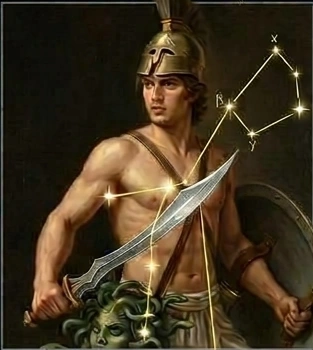
He had been on a quest and carried the head of Medusa, whose gaze could turn anyone to stone. Using it, Perseus defeated the monster and rescued Andromeda.
The two later married, while Cassiopeia, Andromeda, Perseus, and Cetus were placed among the stars. Their story lives on in the night sky, where their constellations can still be found today.
A Quick Guide to Find Them
After learning the stories behind these constellations, you might find yourself wanting to look up at the night sky and find them for yourself. The good news is, it's easier than you might think!
Head outside after sunset and start by facing north or northeast. Look fairly high above the horizon and let your eyes adjust to the darkness.
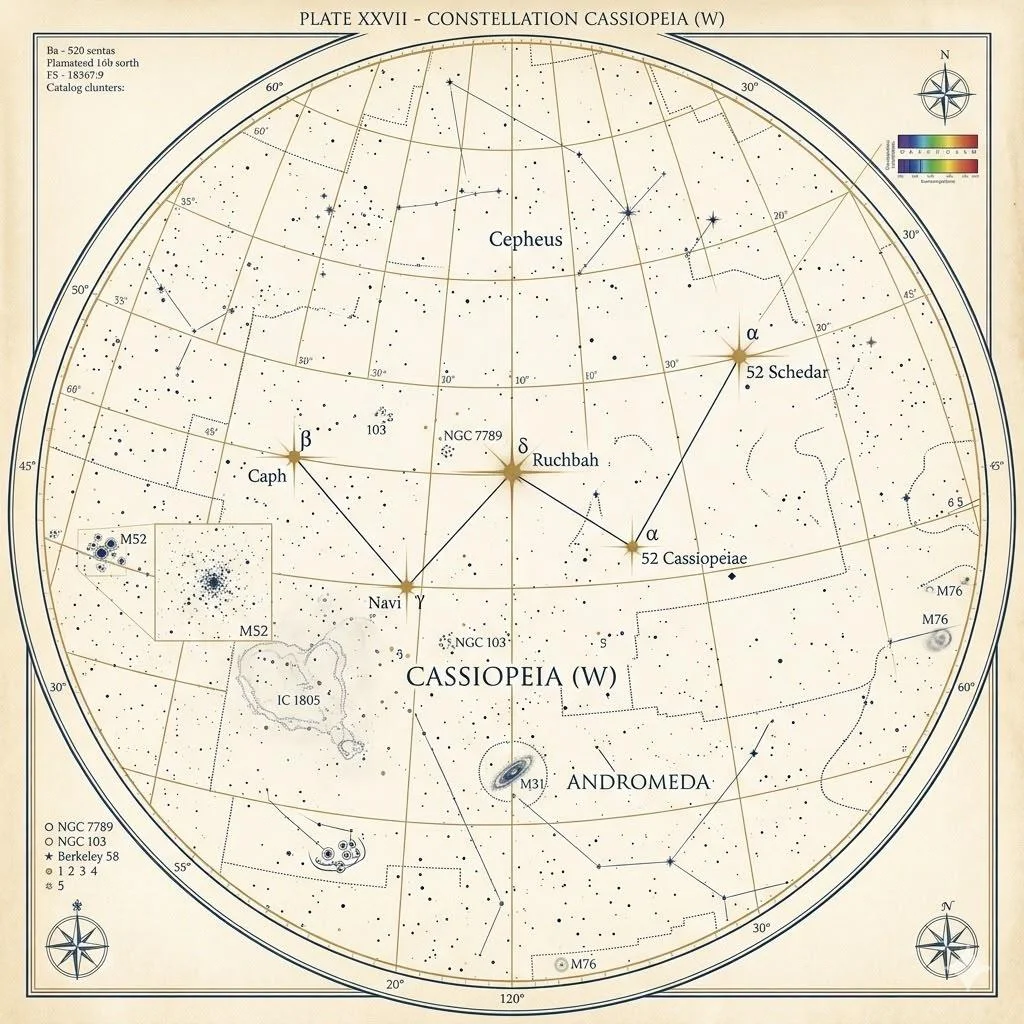 Plate XXVII — Constellation Cassiopeia (W)
Cassiopeia
Look northeast along the Milky Way for its bright W-shaped pattern. It's your easiest starting point.
Perseus
From Cassiopeia, look below and slightly east to find Perseus. β Persei, Algol, the “Demon Star,” is hiding among its stars. It represents the eye of Medusa.
Andromeda
Look east and southeast from Cassiopeia, near the Great Square of Pegasus. It's a graceful chain of stars.
Cepheus
Look above and slightly west of Cassiopeia for its little house-shaped pattern.
Cetus
Look lower toward the southeast, stretching beneath Andromeda and Pisces.
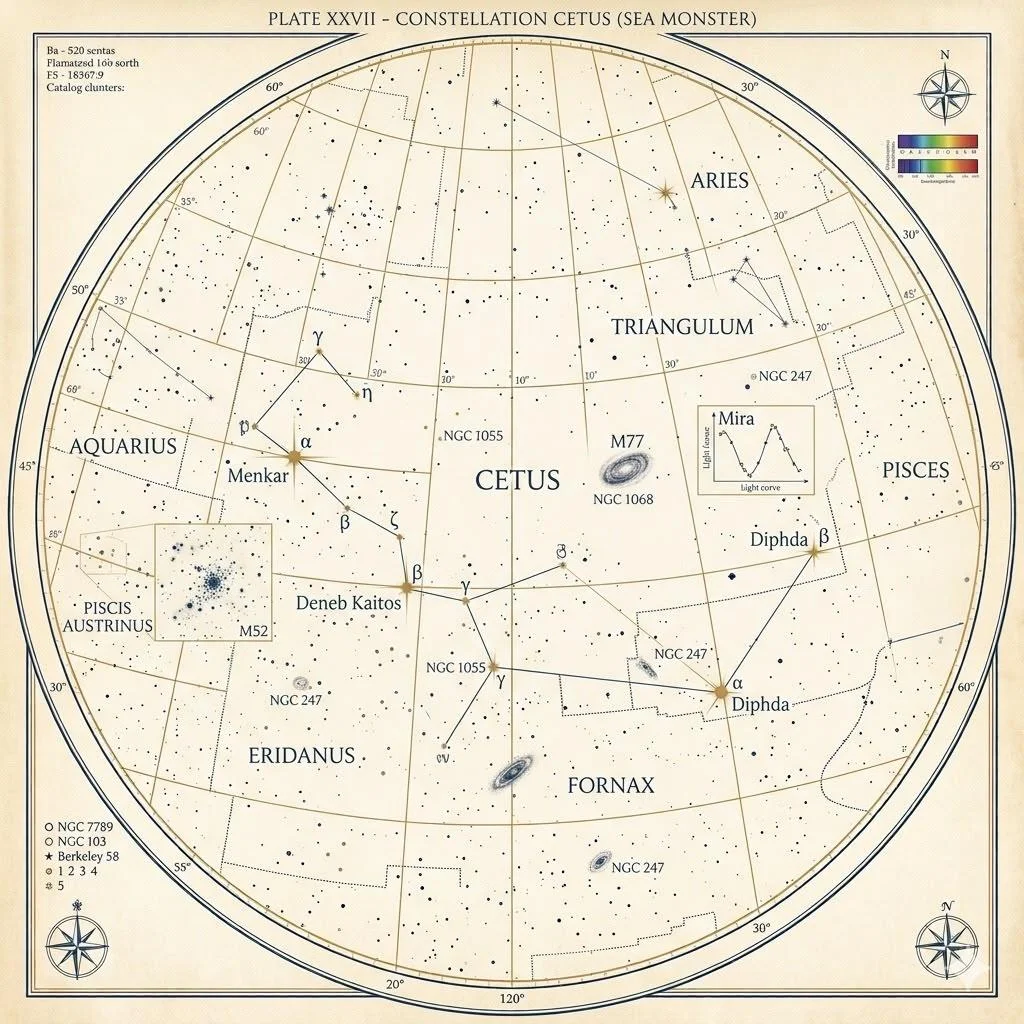 Plate XXVIII — Constellation Cetus (Sea Monster)
Sabrina Rahman
Dept. of Computer Science and Engineering, SUST
Session 2025-26